
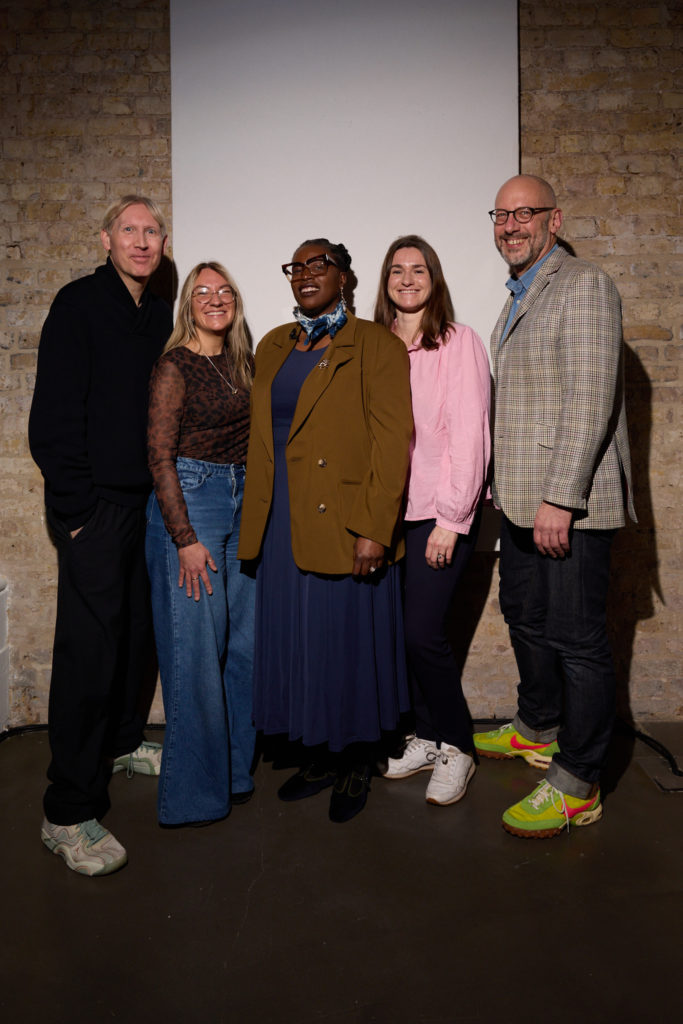
Panel Host Muchaneta ten Napel (middle) and Manufacturing Futures 2026 Judges
Image: Morgan White
The Evo Fashion 2026 graduating cohort
Image: Morgan White

Marking Fashion District’s third manufacturing challenge, this year the focus is on technological innovations and sustainable solutions that are solving any of the complex fashion manufacturing challenges facing the industry. Helen Lax, Director of Fashion District, kicked off the event with a reflective welcome: “I’ve been thinking about what we really mean when we say we want to innovate the industry. What are startups and founders doing, and how can we, as a group of people, push that agenda forward?”
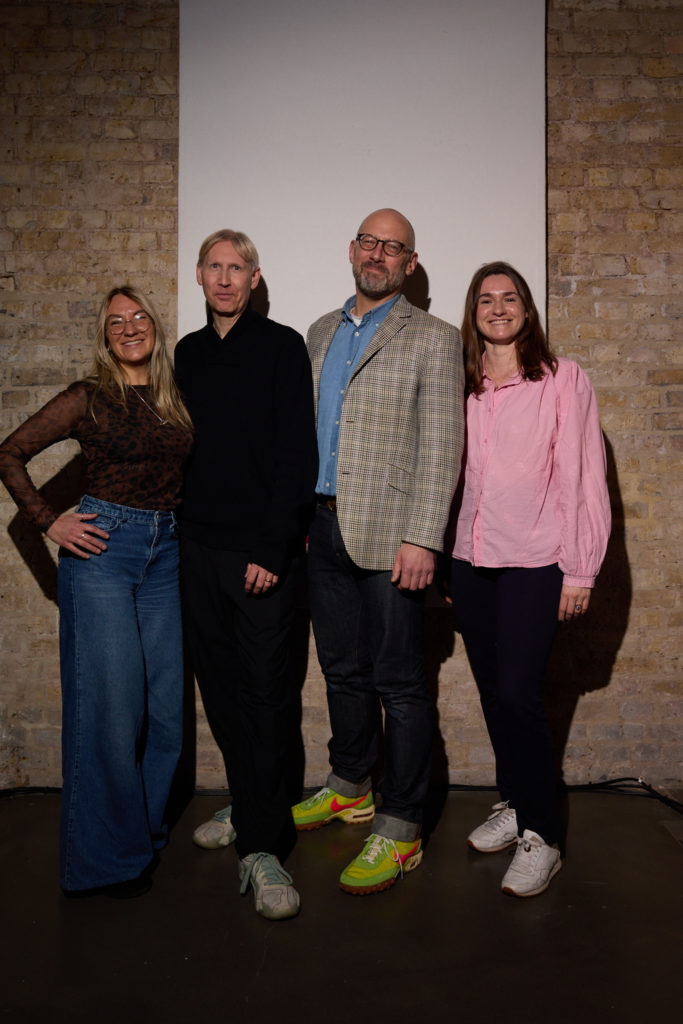
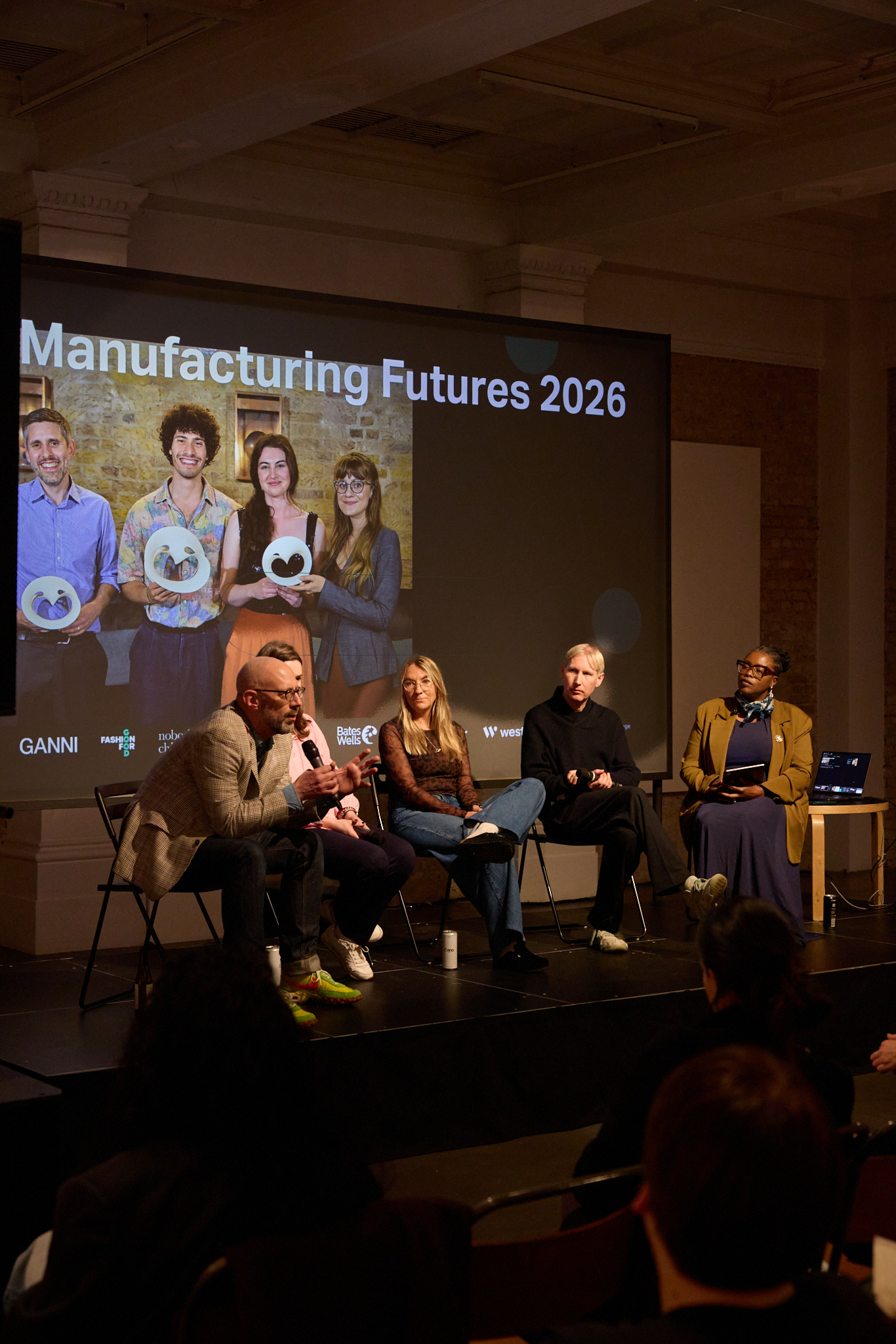
Muchaneta ten Napel, Founder and CEO of Shape Innovate then took to the stage to host a Meet the Judges session with this year’s expert panel: Adam Mansell, CEO of UKFT; Georgia Parker, Innovation Director at Fashion for Good; Philly Grogan, Sustainability Manager at Nobody’s Child; and Matthew Drinkwater, Head of Fashion Innovation Agency at UAL: London College of Fashion.
The conversation began by exploring the tension between technical innovation and real-world adoption. Startups which develop groundbreaking biomaterials, often stumble not because the science is flawed but because the fashion system itself is not ready. Adam Mansell emphasised that startups frequently misunderstand the pace and complexity of the industry:
“Startups don’t fail because they lack ambition – they fail because they don’t understand the system they’re stepping into. Fashion wants everything yesterday, but these are long-term scientific challenges that take years to fund and develop.”
The judges highlighted that innovation must fit within the economic and operational realities of the industry. Even the most promising sustainable materials will struggle to gain traction if they can’t meet cost pressures or integrate into existing supply chains. Philly Grogan explained how internal brand dynamics matter: enthusiasm in innovation teams is not enough – success often hinges on engaging sourcing teams, aligning with margins and building the right supplier relationships. “It’s being able to make that shift from innovation teams to working with sourcing teams,” she noted.
The conversation also tackled the challenges of recycling and circularity. Complexities arise when dealing with post-consumer textile waste: mixed fibres, buttons, zips and varying product types all complicate recycling at scale. Matthew Drinkwater highlighted opportunities in pre-processing, on-demand manufacturing and better prediction of consumer demand, noting that AI and digital tools could significantly reduce waste and inefficiency.
Regulation and compliance were another focal point. Georgia Parker and Adam Mansell stressed that technical solutions alone are insufficient; innovators must understand the regulatory landscape and how their solutions align with upcoming compliance requirements. Being “ready” means more than technical feasibility – it means knowing the materials, supply chain and brand priorities, and being able to demonstrate tangible solutions that solve real problems.
When asked about gaps in the market, the panel pointed to persistent opportunities in textiles and footwear recycling, digital pre-processing, waterless dyeing and on-demand manufacturing. Matthew highlighted that regulation and policy can create openings for tech-driven solutions, while Philly emphasised the importance of embedding innovation into the business as usual, rather than treating it as a pilot or capsule project.
“You have to infiltrate every function in the business. Setting KPIs across product categories so sustainability is baked into everything rather than being a side project.”
Finally, the panel offered advice for applicants looking to stand out: understand the industry, know your brand’s current materials and processes, align solutions with upcoming regulations and communicate how your innovation tangibly solves real problems. The consensus was clear: innovation isn’t just about technology – it’s about systems, economics and collaboration.
Following the discussion, Helen Lax presented the details of Manufacturing Futures 2026, highlighting the opportunity for startups and SMEs to submit solutions across materials, digital processes, circularity, waste management and transparency. Applicants are in with the chance to win a £15,000 cash prize, business support and the opportunity to pitch directly to industry leaders.
Do you have what it takes to create the next big manufacturing innovation? Applications for Manufacturing Futures 2026 are now open.

Subscribe to our newsletter for the latest Fashion District updates, and follow us to keep up-to-date with our events and opportunities: